When “What do you want to do?” gets you… nothing
You ask your students what they want to do after high school.
One says, “I don’t know.”
One says, “Be a gamer.”
Three confidently say “nurse”… and then can’t name a single job duty.
(And yes, someone will say “YouTuber.” Every time.)
Meanwhile, you’re standing there thinking:
How am I supposed to help them plan their future when they don’t even know what’s out there?
If that feels familiar, you’re not alone.
We tell students to dream big and plan for the future, but most of them are working with very limited exposure to careers.
They don’t lack motivation.
They just don’t have enough awareness, structure, or a starting point yet.
Why students get stuck so fast
Most students only know careers they’ve:
- Seen in their family
- Seen on social media
- Heard about from friends
That’s it.
So when we ask them to “pick a career,” they’re choosing from a tiny list.
No wonder they shut down or default to the same few answers.

A simple way to approach career exploration (without overcomplicating it)
You don’t need a full unit or weeks of prep to get started.
I’ve found it helps to think of career exploration as a simple 3-step process:
- Self-reflection
- Career exploration
- Real-world connection
Even doing a little bit of each goes a long way.
Step 1: Start with self-reflection (before careers even come up)
I used to skip this part and jump straight into career research… and it never worked.
Students need a chance to think about themselves first.
An easy way to do that is a “Love List.”
Have students quickly brainstorm:
- What they enjoy doing
- What makes them lose track of time
- What they’ve had fun doing
- What they want to try again
- What they’re curious about
If they get stuck (they will), try a quickwrite:
- A time I had a lot of fun was…
- I feel most like myself when…
- Something I want to learn more about is…
You can also introduce a simple interest inventory like the RIASEC model to give them a starting point.
Want something ready to use?
If you’re reading this thinking, I don’t have time to build this from scratch…
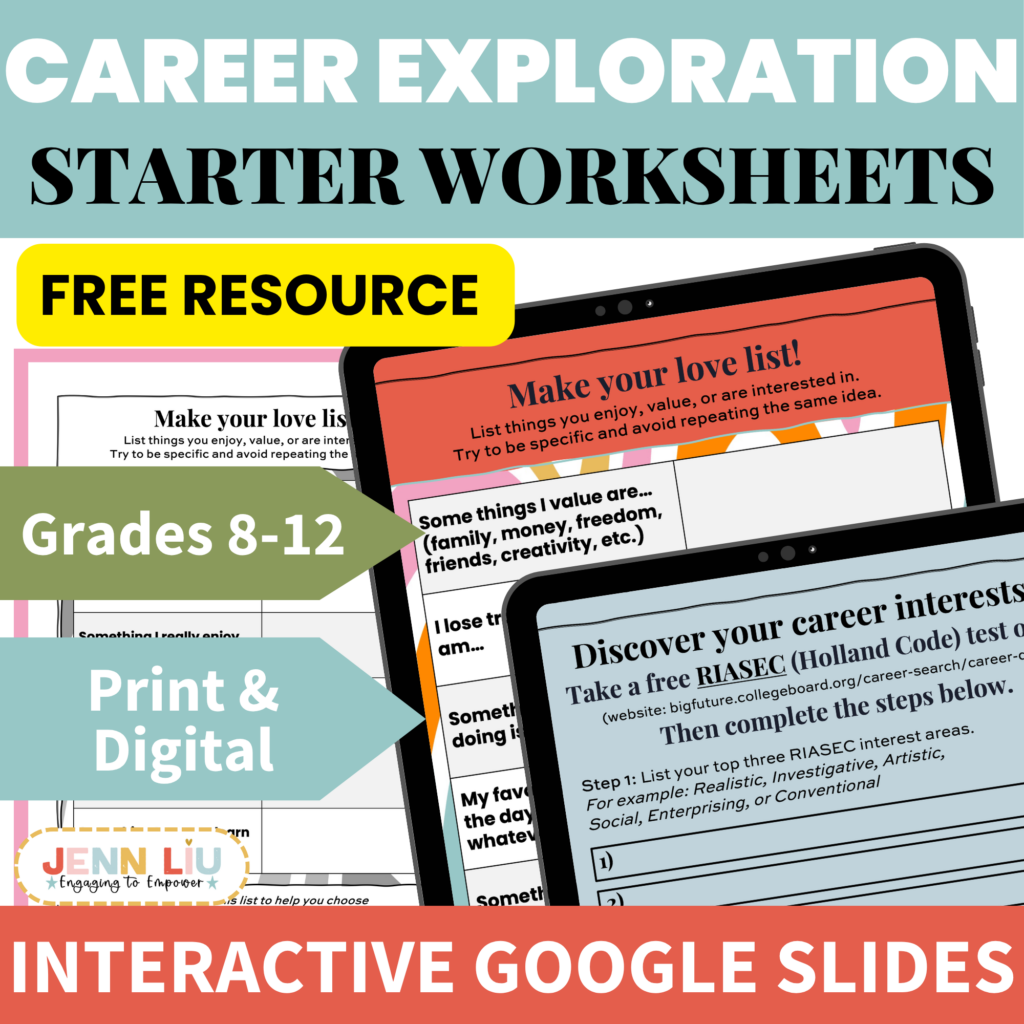
I made a simple Career Exploration Starter Kit you can use right away.
It includes:
- A guided “Love List” activity
- A student-friendly interest exploration page
- Easy reflection prompts
It’s quick, low-prep, and works well for Advisory, AVID, or even a sub day.
Grab it here and use it with your students this week.
Step 2: Help students explore careers (without shutting ideas down too fast)
Once students have a starting point, it’s time to expand their options.
This is where students go wrong, they cross things off way too fast.
Instead, have them explore at least 10 possible careers before narrowing anything down.
You can build off their interest results from the RIASEC model, then add another layer with personality using the Myers-Briggs Type Indicator.
This helps students start to see how their personality actually shows up in real jobs, not just what sounds interesting on a list.
And this is usually the moment when they go,
“Wait… I didn’t even know this job existed.”
(Also usually followed by, “Wait, how much do they make?”)
From there, guide them with simple questions:
- Would I actually enjoy this day-to-day?
- Can this support the lifestyle I want?
- Am I okay with the required training?
- Does this work environment feel like a fit?
Step 3: Make it real (this is where things start to click)
This is the part students actually remember.
Once they’ve narrowed their list, give them ways to go beyond Google.
Try:
- Interviewing someone in that career
- Talking to family or trusted adults
- Guest speakers
- Short presentations or projects
One of the most powerful things you can do is have students ask:
“Which of these careers do you think fits me best… and why?”
They start hearing patterns like:
“You’re really good with people” or
“You’re always solving problems”
…and suddenly it feels more real.
When you want to go deeper (without it turning into a whole mess)
If you’ve ever tried to extend this, you already know what happens.
Students:
- Get overwhelmed
- Change their minds every five minutes
- Or go right back to “I don’t know”
That’s where having a simple structure helps.
When I go deeper with students, I have them:
- Narrow their list to their top 5 careers
- Get feedback from friends and family
- Look for patterns in what others notice
- Use the Japanese concept of Ikigai to think about purpose and fit
- Then move into more focused research
This is where they stop guessing and start making more confident choices.
Frequently Asked Questions
What if students say they have no interests?
That’s normal.
Start with:
- What they don’t like
- How they spend their free time
- Structured prompts instead of open-ended questions
Most students just need a starting point.
How long does this take?
You can start in 1–2 class periods.
It doesn’t have to be a full unit to make an impact.
Do students actually take this seriously?
More than you’d think.
As soon as it feels connected to their real life, they’re in.
Final thoughts (and an easy win for this week)
The next time a student says,
“I don’t know what I want to do…”
You won’t have to say, “Just think about it.”
You’ll have somewhere to start.
And if you want to make it easy on yourself…
Grab the Career Exploration Starter Kit and try it this week.
It’s simple, low-prep, and helps students go from
“I don’t know…”
to
“Wait… this might actually fit me.”
Bold font